


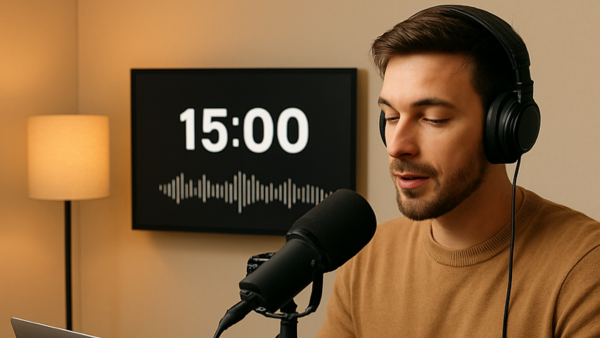
Podcasting used to be dominated by long conversations, marathon interviews, and episodes that felt more like a full evening commitment than a quick listen.
That is still part of the format, but a different kind of podcast is gaining real traction: the shorter, tighter, easier-to-fit-into-life micro-cast. Podcast listening overall is at a record high in the U.S., with 55% of Americans 12+ having listened in the last month and 40% in the last week, while the industry is also adjusting to a more competitive, platform-driven environment shaped by video, attention pressure, and changing listener habits.
Why Shorter Podcasts Make Sense Right Now
The rise of the micro-cast is really about modern attention.
People are overwhelmed. They are moving between work, errands, notifications, streaming platforms, newsletters, social media, and short-form video all day. In that environment, a 15-minute podcast feels manageable. It feels finishable. It feels like something you can fit into a commute, a walk, a coffee break, or the gap between meetings.
That matters because podcasting is no longer competing only with other podcasts. It is competing with everything. And in a crowded media environment, convenience becomes part of the value proposition. That broader pressure is showing up across podcast research and industry reporting, which points to audience growth alongside stronger competition for time and attention.
The Appeal of the “Finishable” Episode
Long podcasts can build loyalty, depth, and intimacy. But short podcasts offer a different kind of psychological reward: completion.
There is something satisfying about finishing an episode in one sitting. It gives listeners a sense of momentum instead of backlog. That is especially important now that so many people feel buried by content they mean to get to later. A tight episode can feel more useful than a great episode that demands an hour you do not have.
That helps explain why micro-casts work especially well for news, commentary, explainers, practical advice, motivation, niche updates, and quick storytelling formats. This is an inference based on the industry’s broader shift toward format flexibility and genre-dependent platform strategy, not a single report claiming “15 minutes is best.”
Micro-Casts Fit the Way People Actually Live
A shorter show also matches how many people now consume audio: in fragments.
Listeners may start something in the car, pick it back up while cleaning, and switch to something else by the time they open another app. That fragmented behavior makes concise audio more attractive. Even as video becomes more important in podcasting, audio remains core, especially for listeners whose hands and eyes are busy. Sounds Profitable’s recent Audio Primes report describes a commercially valuable segment of podcast consumers who are heavy audio users and are especially likely to be parents balancing work, family, and commutes.
That is exactly the kind of life pattern that makes a 10-to-15-minute episode feel smart rather than small.
Why Creators Like the Format Too
Micro-casts are not just easier to consume. They are often easier to produce consistently.
A shorter format can force sharper thinking. It can reduce filler. It can help a creator become known for a repeatable, focused structure instead of depending on loose, longform sprawl. That makes the format attractive for solo hosts, brands, experts, journalists, and newsletter-style creators who want to publish more often without making every episode a major production event.
In a media world that increasingly rewards consistency, distribution, and multi-format publishing, shorter podcasts are easier to clip, summarize, repurpose, and pair with video or social content. That aligns with broader content and distribution trends identified in current marketing analysis.
This Does Not Mean Long Podcasts Are Going Away
The rise of micro-casts does not mean long podcasts are dead.
It means podcasting is maturing. Some listeners still want two-hour conversations. Others want a sharp, useful 12-minute update. The format is becoming more segmented, more intentional, and more responsive to context. Even Triton Digital’s latest U.S. podcast report emphasizes that podcast strategy is becoming more genre-dependent, especially as audio and video evolve together.
That is why micro-casts matter. They are not a downgrade from “real” podcasting. They are a response to the reality of how people live, listen, and choose.
The 15-minute podcast is taking over because it respects the modern listener’s time. It gives people something clear, useful, and finishable in a media environment built on overload. And right now, that kind of restraint may be one of the smartest things a podcast can offer.
Comments
No comments yet. Be the first to share your thoughts.
Log in to add a comment.