


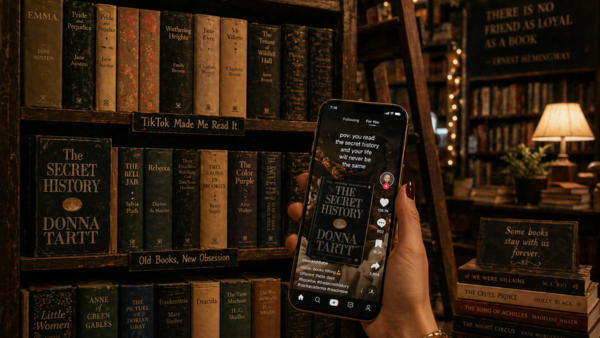
A book used to have a fairly predictable commercial life.
It launched, got a publicity push, maybe caught a review wave, maybe landed on a table at a bookstore, and then slowly drifted into the backlist where only loyal readers, librarians, teachers, or genre diehards kept it alive. BookTok changed that cycle. It turned older books into endlessly rediscoverable products by making emotional reaction, aesthetics, tropes, and reader enthusiasm more important than publication date. Recent TikTok analysis said more than 50 million books recommended by the #BookTok community were sold across Europe in a recent year, generating €800 million in revenue.
Why The Backlist Suddenly Became Infinite
The real power of BookTok is that it does not behave like traditional publishing marketing.
Traditional book marketing is frontlist-heavy. It puts most of its energy behind what is new. BookTok does the opposite. It surfaces what feels emotionally urgent now, whether that book came out last week or ten years ago. That is why older titles can suddenly explode again with almost no regard for their original release calendar. Current trade coverage says BookTok has brought renewed attention to backlist books and also exposed publishing’s tendency to keep chasing what is already working on the platform.
Discovery Now Happens When Readers Are Ready
This is the biggest shift.
Before social media discovery, a reader usually encountered a book because the industry put it in front of them at the right commercial moment. BookTok flipped that model. Now a reader can discover an older novel because someone cried on camera about it, made a trope list, posted a shelf video, or compared it to a trending adaptation. The discovery moment belongs to the algorithm and the audience, not the launch calendar.
That is what makes the backlist economy feel “infinite.” A book does not need to be new to feel current. It only needs to become newly visible.
Why Older Books Win So Hard On BookTok
Older books often perform especially well on BookTok because they arrive with less pressure and more proof.
A backlist title may already have devoted fans, strong word-of-mouth, multiple editions, strong review volume, or an emotional reputation that creators can dramatize in short-form video. Some reporting has pointed to striking sales jumps for older titles associated with BookTok, including Canadian data showing major growth in backlist sales for books published years earlier.
That makes older books easier to revive than many publishers once assumed.
BookTok Turned Emotion Into Retail Infrastructure
BookTok does not sell books by summarizing them neatly. It sells them by making people feel that they are missing an experience.
That is why the platform has been so strong for romance, fantasy, and emotionally intense fiction. In the UK, a recent BookTok bestseller list was dominated by romance and heavily BookTok-driven titles, while current reporting also tied BookTok to a major rise in fantasy and romantasy sales.
The key point is that BookTok sells atmosphere, identity, and emotional payoff. Once that kind of desire attaches to a book, age matters much less than relevance to the reader’s mood.
The Shelf Life Of A Book Looks Different Now
This has changed the economics of publishing in a big way.
Instead of a book having one big shot at commercial relevance, it can now have multiple lives. A title can sell modestly at launch, go quiet, then surge years later because one creator, one trend, one adaptation, or one trope cycle brings it back into circulation. TikTok’s own newsroom said #BookTok drove more than 50 million book sales across Europe in a recent year, while a recent UK report said BookTok generated £86 million in book sales there in the prior year alone.
That is not just marketing influence. That is a structural change in how books stay commercially alive.
Why Publishers Love And Fear This At The Same Time
The upside is obvious. Older inventory can become newly valuable. Backlist titles can behave like fresh releases. A publisher’s catalog becomes a living library of possible future hits.
The downside is that this system is harder to control. Trade coverage recently noted that BookTok has highlighted publishing’s habit of chasing what is already working instead of building broader discovery strategies.
In other words, BookTok created enormous opportunity, but it also weakened the industry’s old assumption that publishers alone decide when a book’s commercial moment happens.
Why This Economy Feels Endless
The infinite backlist economy exists because the internet no longer treats books like seasonal products. It treats them like emotional assets waiting to be reactivated.
A powerful clip, a niche reading trend, a film adaptation, a creator obsession, or a sudden wave of aesthetic relevance can drag an old title back into public life instantly. Once that happens, a backlist book is no longer “old” in the way publishing used to define old. It is simply undiscovered by the next wave of readers.
That is what BookTok really changed. It made the backlist feel less like the archive and more like a reservoir of future bestsellers. In that environment, a book does not fade out just because its launch window closed. It waits. And on BookTok, waiting is no longer the same thing as disappearing.
Comments
No comments yet. Be the first to share your thoughts.
Log in to add a comment.