


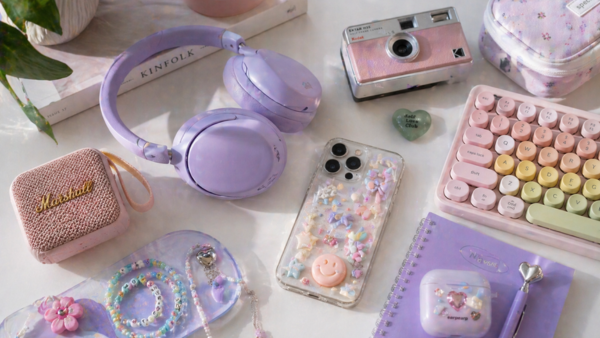
Tech used to sell itself on power, speed, and specs. Now it also has to look good in your hand, on your desk, and in your outfit photos.
That is why the “cute tech” movement feels so relevant right now. Consumers are paying more attention to earbuds, keyboards, cameras, phone cases, portable gaming devices, chargers, and speakers that feel expressive, colorful, nostalgic, or aesthetically pleasing. Hardware is no longer just a tool. It is becoming part of personal style.
Why Cute Tech Is Catching On
The shift is really about identity.
People do not only carry devices anymore. They carry visible lifestyle signals. A pastel keyboard, transparent gadget, charm-covered phone, or retro-style camera says something different than a plain black slab. It suggests taste, mood, and personality. In a culture where daily life is constantly photographed and shared, it makes sense that people want their tech to look less anonymous.
That is a major reason hardware is moving closer to fashion. The device is still functional, but it also has to feel like it belongs to the person using it.
Why Plain Minimalism Is Losing Some Ground
Minimalist design is not disappearing, but it is facing more competition from personality-driven products.
For years, consumer tech leaned heavily on sleek neutrals, ultra-clean finishes, and a kind of serious sameness. That aesthetic still works, but many shoppers now want more charm and emotional texture. They want devices that feel playful, soft, nostalgic, or collectible rather than purely efficient.
This is especially visible in accessories. Cases, charms, skins, straps, desk setups, and peripheral devices are giving people an easy way to personalize their technology without replacing the core device itself.
Social Media Helped Turn Tech Into Style
A big reason this movement is accelerating is visibility.
On social platforms, people do not just show what they are doing. They show how their life looks. That includes the objects around them. A cute pair of headphones, a color-coordinated desk setup, or a handheld gadget in a fun finish becomes part of the visual story.
That changes buying behavior. Consumers start choosing hardware that photographs well, matches their aesthetic, or feels more emotionally satisfying to own. In that sense, cute tech is not only about design. It is about display.
Why Accessories Are Leading the Trend
Some of the strongest products in this movement are not the main device. They are the add-ons.
Phone charms, whimsical cases, colorful keyboard caps, decorative laptop sleeves, mini printers, stylish e-readers, custom AirPods cases, and tiny portable speakers all fit into the cute tech ecosystem because they blend utility with visual appeal. They make everyday tools feel more personal.
That matters because accessories are easier to switch, collect, and update. People may keep the same phone for years, but they can keep refreshing how that phone looks and feels through styling.
The Nostalgia Factor Is Huge
Cute tech also benefits from nostalgia.
Many products in this space borrow from older design language: translucent plastic, toy-like shapes, rounded forms, retro buttons, digital pets, point-and-shoot camera energy, and colorful finishes that feel more fun than corporate. That nostalgia makes technology feel less cold.
It also creates an emotional hook. People are drawn to products that remind them of earlier gadgets, childhood objects, or simpler forms of play. That makes the hardware feel more lovable, which is not a small thing in an industry that used to market mostly around performance.
Why This Trend Has Real Staying Power
Cute tech is not just a passing visual fad because it reflects a larger shift in consumer behavior.
People increasingly want the products they use every day to feel aligned with their personality. They want functionality, but they also want delight. They want something useful, but they also want something that feels like theirs. That is why hardware is starting to behave more like an accessory category.
The strongest products in this space will be the ones that combine both sides well. If a gadget is cute but annoying to use, the charm fades fast. But if it works well and looks distinctive, it becomes something more powerful than a device. It becomes part of someone’s personal aesthetic.
The cute tech movement is really about the softening of technology. Hardware no longer has to look distant, severe, or purely professional to be taken seriously. It can be stylish, playful, and expressive while still being useful. That is exactly why it is becoming such a strong statement accessory now. People are no longer satisfied with tech that only performs. They want tech that also feels like an extension of who they are.
Comments
No comments yet. Be the first to share your thoughts.
Log in to add a comment.