


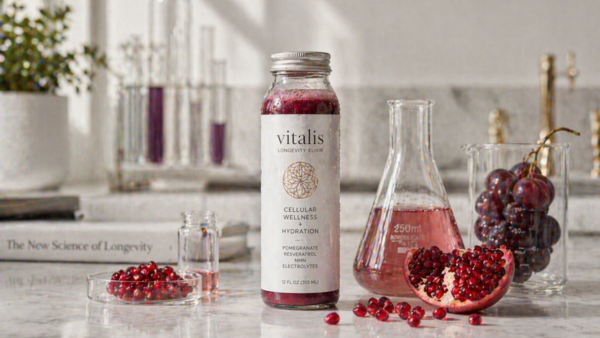
Wellness drinks are chasing a new kind of promise.
Not just hydration. Not just energy. Not even just protein or electrolytes. The new pitch is cellular health, healthy aging, and “longevity support,” which is exactly why ingredients like NAD-related compounds, NMN, and resveratrol are showing up in more wellness conversations and product concepts. At the same time, the science and regulation around these ingredients are still much messier than the marketing often suggests. The FDA says dietary supplements are not approved for safety or effectiveness before they are marketed, and the NIH Office of Dietary Supplements says many supplements still need more study to determine their value.
Why These Ingredients Sound So Powerful
The appeal starts with the story.
NAD is a coenzyme involved in cellular energy processes, which helps explain why NAD-related ingredients are constantly framed around vitality, repair, and aging. NMN is marketed as a precursor linked to NAD pathways, while resveratrol is usually positioned as a plant compound associated with antioxidant and healthy-aging language. On paper, that trio sounds like the perfect fit for a premium wellness drink: science-coded, aspirational, and easy to package into a daily ritual. That broader longevity business is booming, but reporting from the Wall Street Journal notes that the science behind many of these claims remains heavily debated.
Why Brands Want Them in Drinks
These ingredients fit the current functional-beverage playbook almost perfectly.
They make a drink feel more advanced than a standard sparkling water and more lifestyle-friendly than a capsule bottle. A longevity drink can be sold as part of a morning routine, post-workout reset, travel habit, or premium self-care ritual. That is why the category is so attractive: it turns a beverage into a daily identity product. Recent wellness trend coverage has pointed to longevity as a major consumer theme, especially when paired with convenience and visible routines.
Why The Science Needs A More Honest Framing
This is where the topic gets more complicated.
Resveratrol, for example, has some intriguing research around metabolic health, but the National Center for Complementary and Integrative Health says the evidence remains low-certainty and more research is needed before definitive conclusions can be drawn. More broadly, NIH and FDA consumer guidance stress that supplements are not preapproved for effectiveness and that buyers should not confuse availability with proven benefit.
That does not mean these ingredients are worthless. It means the market is moving faster than the evidence.
The NMN And NAD Problem
The biggest issue for longevity drinks may not be branding. It may be clarity.
NAD itself is difficult territory because FDA warnings around compounded NAD+ injectables have cited adverse-event reports including severe chills, shaking, vomiting, and fatigue. That warning was about sterile compounded injectable products, not canned drinks, but it shows how easily the NAD conversation gets more serious once marketing starts sounding medical. NMN also sits in a murky regulatory space, with FDA maintaining an ingredient directory and continuing to evaluate supplement-related questions around ingredients like NMN rather than offering a simple mainstream green light.
That uncertainty makes the “longevity drink” category feel both trendy and unstable at the same time.
Why Consumers Still Want The Category
Even with the scientific and regulatory gray areas, people are still drawn to products like this for a simple reason: they want wellness that feels easy.
A drink feels more effortless than a supplement stack. It feels more modern than a pill organizer. It also fits the current consumer appetite for products that blur the line between habit, luxury, and self-optimization. The wellness market keeps rewarding products that promise to make daily routines feel smarter, cleaner, and more future-focused, even when the underlying evidence is still catching up.
What This Trend Really Says About Wellness
Longevity-focused drinks are less about settled science and more about the direction of consumer desire.
People want products that make them feel proactive. They want to believe their daily habits are doing more than getting them through the day. NAD, NMN, and resveratrol fit that emotional need extremely well because they sound scientific, premium, and age-aware. The challenge for brands is that this category works best when it is framed carefully. Once the promise moves from “wellness ritual” to implied treatment or anti-aging certainty, the gap between marketing and evidence gets harder to ignore.
That is why longevity drinks are getting attention. They capture the mood of modern wellness almost perfectly: ambitious, bio-curious, convenience-driven, and hungry for formulas that make everyday life feel a little more optimized. Whether the category becomes a lasting essential or just another polished wellness phase will depend on how much real evidence eventually catches up to the story.
Comments
No comments yet. Be the first to share your thoughts.
Log in to add a comment.