


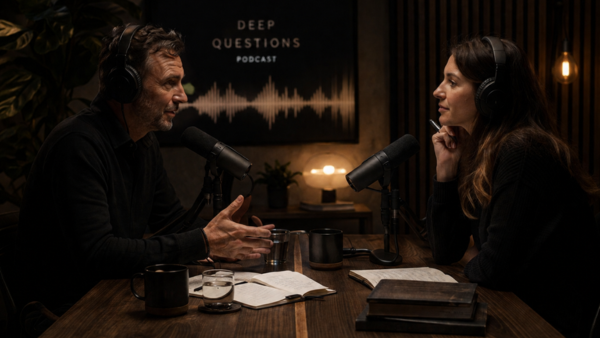
Interviewing used to feel like a craft. Then, for a while, a lot of media made it feel like a shortcut.
Tight segments, promotional junkets, rushed talking points, and clip-first formats flattened many conversations into content delivery. Podcasts helped reverse that. Podcast consumption in the U.S. has reached record highs, with 70% of Americans 12+ having listened to a podcast and 55% listening monthly, which helps explain why the format now has enough reach to shape culture instead of sitting on the edge of it.
Why The Format Changed The Conversation
The biggest difference is time.
Podcast interviews are often long enough for someone to stop performing the first version of themselves. A guest can move past the polished answer, the rehearsed anecdote, and the headline-ready quote. That is part of why celebrity interview podcasts have become such a major lane in media: the format gives public figures room to sound more human, more reflective, and sometimes more surprising than they do in traditional press appearances.
Why Listeners Trust Podcast Interviews More
Podcasts also benefit from intimacy.
People usually listen through headphones, during commutes, workouts, chores, or quiet stretches of the day. That makes the conversation feel less like a broadcast and more like proximity. Edison’s Podcast Consumer 2025 found strong engagement and trust among podcast listeners, which helps explain why a thoughtful interview can land differently in audio than it does in faster, more transactional media.
The Best Podcast Interviews Reward Curiosity, Not Speed
What podcasts brought back is patience.
A strong interviewer in audio does not just ask questions. They listen, follow the interesting detour, sit in the pause, and know when not to interrupt a good answer. That is much closer to the classic “art of the interview” than the modern habit of chasing a viral moment as quickly as possible. The continued strength of interview-driven shows in Edison’s podcast rankings suggests audiences still respond to hosts and formats built around recurring conversation, not just disposable clips.
Why Celebrities, Experts, And Public Figures Keep Choosing Podcasts
The appeal is not hard to understand.
For guests, podcasts offer a chance to explain rather than just react. For hosts, they offer a format where personality and rapport matter as much as research. For audiences, they offer something increasingly rare: context. That is one reason podcasts have become such a valuable platform for everyone from entertainers to public figures looking to reach large, engaged audiences in a less filtered setting.
Why This Revival Matters
The return of the interview as a craft matters because good questions still change what people reveal.
Podcasts did not invent great interviewing, but they gave it room to breathe again. They reminded audiences that conversation can be the product, not just the setup for a quote. In a media environment built around speed, interruption, and fragments, the podcast interview feels powerful because it respects something older and still deeply valuable: the idea that if you give people enough space, and ask well enough, they may eventually say something real.
Comments
No comments yet. Be the first to share your thoughts.
Log in to add a comment.