


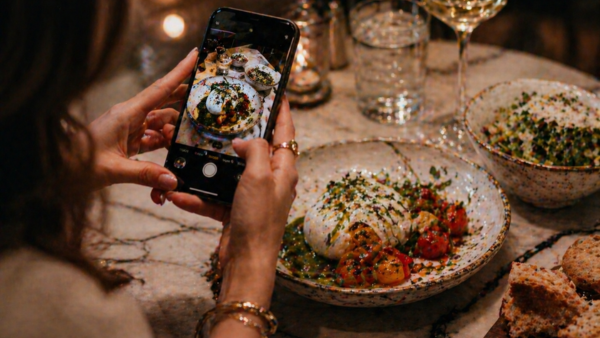
Eating on social media is rarely just about hunger.
It is often about identity, taste, discipline, indulgence, aesthetics, belonging, aspiration, and control, all happening at once. Food posts now operate like social signals. They tell people what kind of person you are, what kind of life you live, and what kind of choices you want associated with your name. Research on food-photo posting has found that sharing food images can enhance diners’ experiences, with self-expression identified as a key mechanism.
What “Performative Eating” Really Means
Performative eating is what happens when food choices become part of public self-presentation.
That does not always mean someone is being fake. It usually means the act of eating is being shaped, at least partly, by the awareness of an audience. The meal is no longer just private consumption. It becomes content, communication, and social positioning. Recent research on social-media self-presentation emphasizes that usage patterns shape how people manage identity online, while food-related creator studies show that gastronomy content has become a site for identity formation and visibility.
Why Food Works So Well As A Social Signal
Food is one of the easiest ways to communicate status and values without saying them directly.
A green smoothie can suggest discipline. A luxury tasting menu can suggest access. A giant cheat meal can suggest confidence or irony. A homemade soup can suggest comfort, simplicity, or care. Food is visual, emotionally loaded, culturally coded, and instantly legible, which makes it perfect for platform culture.
That symbolic side is getting stronger, not weaker. New research on food choice and social image found that social image concern can shape purchase intentions through self-expression motives, showing how food behavior can function as identity display rather than pure preference.
Why People Change How They Eat Once A Camera Appears
The moment food becomes content, behavior can shift.
People may order what photographs best, wait to eat until the lighting works, choose places that fit a certain aesthetic, or frame indulgence and restraint in ways designed for reaction. That is one reason performative eating feels so psychologically interesting: it sits at the intersection of appetite and impression management. The meal is real, but the presentation is strategic.
Studies on foodstagramming and food selfies suggest that norms matter here. When photo-taking and sharing are socially prominent, they can shape enjoyment and future intentions, meaning the social environment changes the eating experience itself.
The Algorithm Rewards Edible Identity
Social platforms do not just host performative eating. They intensify it.
Visually striking foods, emotionally charged routines, extreme health habits, oversized portions, “what I eat in a day” videos, and aesthetically coded indulgence all perform well because they are easy to process and easy to judge. That creates a loop where food becomes less about nourishment and more about narrative.
Research published in 2025 found that exposure to unhealthy food content on YouTube was associated with how people perceived food-related social norms, suggesting social media does not just reflect eating culture. It helps build it. A separate 2025 study similarly found both informational and normative pathways linking social media content to dietary behavior.
Why Performative Eating Can Feel So Compelling
Part of the appeal is that food content makes identity feel manageable.
People may not be able to control every part of their lives, but they can control what appears on the plate, how it is framed, and what it appears to say. Clean eating can look like discipline. Decadent eating can look like freedom. Hyper-healthy eating can look like self-respect. “Messy” indulgence can look like authenticity. Food becomes a shortcut for broadcasting a version of the self.
That is also why the category can become emotionally loaded. Social media research has linked self-presentation pressures, feedback sensitivity, and comparison processes to online stress and fatigue, especially when users become highly aware of audience response.
Where It Gets Uncomfortable
Performative eating becomes a problem when the audience starts influencing the appetite more than the body does.
That can mean eating for the aesthetic, restricting for the image, over-ordering for the content, or turning every meal into a statement. It can also flatten the eating experience into something hyper-aware and less joyful. Even positive food posting can become draining if every bite feels like it needs a concept, a caption, or a reaction.
The issue is not posting food itself. Food sharing can create pleasure, connection, and even stronger dining enjoyment. The issue is when eating becomes overly governed by visibility. At that point, the meal stops being something you are experiencing and starts becoming something you are staging.
What This Says About Social Media Right Now
Performative eating reveals a bigger truth about platform culture: people are not only consuming food online. They are consuming each other’s identities through food.
That is why the category has so much power. A meal post is never just a meal post. It can be aspiration, morality, class signaling, wellness branding, emotional theater, cultural storytelling, or a bid for belonging. Food is one of the most ordinary parts of life, but online it has become one of the most efficient ways to make the ordinary look meaningful.
That is what makes performative eating so sticky. It lets people turn a basic human act into a public language of selfhood. And in a culture where almost everything is becoming content, eating may be one of the clearest examples of how the line between living and performing keeps getting harder to see.
Comments
No comments yet. Be the first to share your thoughts.
Log in to add a comment.