


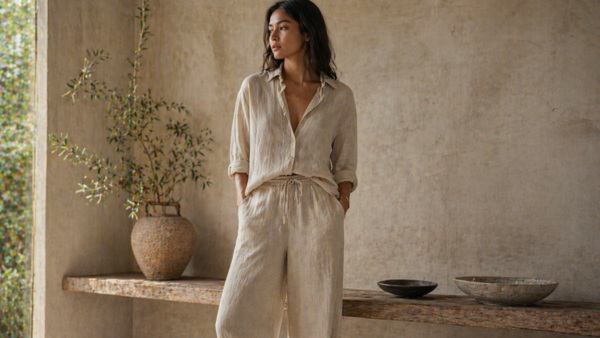
Something is shifting in how people want their clothes to feel.
After years of stretch blends, polyester-heavy basics, and performance fabrics everywhere, more shoppers are getting pulled toward older materials like linen and hemp. The appeal is not just aesthetic. It is sensory, cultural, and practical. Natural-fiber clothing feels more breathable, more textured, and more grounded in a way synthetic fabrics often do not. At the same time, fashion’s material conversation is getting louder as the industry confronts how dominant fossil-fuel-based synthetics have become. Textile Exchange says polyester alone made up 59% of global fiber production in 2024, with fossil-based synthetics continuing to drive market growth.
Why Linen And Hemp Feel Fresh Again
Part of the reason these “ancient” fibers feel modern is that they offer the opposite of what many clothes have become.
Linen and hemp tend to signal airiness, texture, and visible natural character. They wrinkle, soften, and age in ways that make them feel lived in rather than chemically perfected. That matters in a style cycle that has been moving away from hyper-slick sameness and back toward materials that feel more tactile and real. Forbes recently noted growing investor and brand interest in natural fabrics including linen and hemp as fashion looks for alternatives to fossil-fuel-derived materials.
Why People Are Getting Tired Of Synthetics
Synthetic fabrics still dominate because they are cheap, durable, and easy to mass-produce. They also offer properties people genuinely like, including wrinkle resistance, quick drying, and stretch. Textile Exchange explicitly notes that synthetics are consumer-friendly for exactly those reasons.
But that convenience now comes with baggage. More shoppers are paying attention to the fact that most synthetic fibers are tied to fossil-fuel-based production, and the fashion industry is under more pressure to reduce emissions and rethink raw materials. Textile Exchange’s broader climate strategy is built around cutting emissions at the material level, which is one reason natural fibers are getting renewed attention.
Why Hemp And Linen Fit The Current Mood
Linen and hemp also match the mood of fashion right now: easier, looser, and less overprocessed.
Hemp, in particular, has a strong story because it grows quickly, is naturally resistant to many insect species, and generally needs little water to cultivate. Textile Exchange also notes its deep root system can help reduce soil loss and erosion. Linen, made from flax, carries a similar old-world, low-intervention appeal in the public imagination.
That does not mean these fibers are magically perfect. Textile Exchange is clear that hemp production, processing, and transportation can still be water- and energy-intensive.
What people seem to want, though, is not a fantasy material. They want fabrics that feel less artificial, less plastic, and more connected to nature and craftsmanship.
What This Trend Really Says About Fashion
The return of linen and hemp is not just about sustainability language. It is about emotional texture.
People want clothes that breathe better, feel better on the skin, and look like they belong to a human life rather than a lab-finished uniform. In that sense, linen and hemp are not coming back because they are old. They are coming back because they answer a very current desire for materials that feel calmer, more honest, and less synthetic in every sense of the word. And as fashion keeps rethinking its dependence on fossil-based fibers, these older fabrics may keep looking newer than ever.
Comments
No comments yet. Be the first to share your thoughts.
Log in to add a comment.