


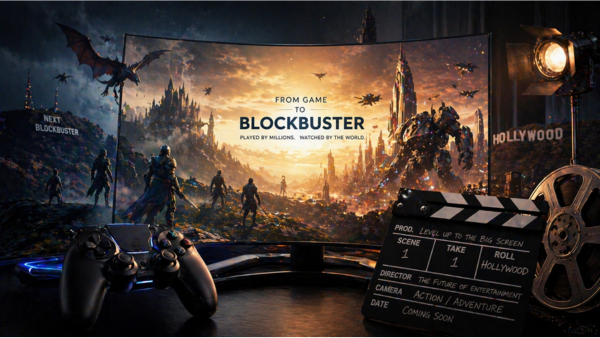
For a long time, video game adaptations were treated like risky side projects. Studios kept trying them, audiences kept showing up cautiously, and the results were often messy enough to make the whole category feel cursed.
That stigma is fading fast.
What used to feel like an occasional experiment now looks more like a full entertainment pipeline. The success of The Super Mario Bros. Movie, which grossed about $1.36 billion worldwide, helped prove that game-based movies could become true blockbuster events, not just fan-service curiosities. At the same time, HBO’s The Last of Us turned a game adaptation into prestige television, earning 24 Emmy nominations and drawing nearly 40 million U.S. viewers for its first episode within two months.
Why This Pipeline Feels Bigger Now
The biggest shift is that Hollywood no longer sees games as niche.
Games already come with built-in worlds, recognizable characters, passionate fan bases, and global brand awareness. The Entertainment Software Association reported in 2025 that 205.1 million Americans play video games regularly, with 60% of adults playing weekly. That means game adaptations are no longer being made for a tiny subculture. They are being made for a mainstream audience that already understands the source material.
Studios Finally Learned What To Adapt
Part of the early problem was that Hollywood used to approach games like loose raw material.
Now studios seem more interested in adapting what people actually love about them: the tone, the world-building, the character mythology, and the visual identity. That is why the recent wave feels more confident. Instead of trying to turn every game into a generic action movie, studios are treating game IP as franchise storytelling with its own built-in rules and emotional expectations.
That mindset change helps explain why the pipeline now includes very different types of projects rather than one repeated formula.
The Pipeline Is Expanding Fast
This is not just about one Mario movie or one prestige TV hit. It is about momentum.
Nintendo’s live-action The Legend of Zelda film is set for 2027, Street Fighter is back on the release calendar for October 2026, and Elden Ring is already moving toward a 2028 theatrical release. Paramount and Sega are also continuing to build out the Sonic universe, with Sonic the Hedgehog 3 surpassing $425 million worldwide and Sonic 4 dated for March 2027.
That is what a real pipeline looks like: not one-off adaptations, but repeatable franchise investment.
Why Games Are So Attractive To Hollywood
Game franchises offer something studios desperately want: pre-sold attention.
A known game title comes with instant recognition, fan conversation, merch potential, sequel potential, and cross-platform marketing value. It can live as a movie, a series, a soundtrack, a licensing machine, and a social media event all at once. In an industry obsessed with recognizable IP, video games now look less like a gamble and more like one of the smartest remaining bets.
What Happens Next
The next phase of the game-to-film pipeline will probably be more selective, not less ambitious.
Studios will keep chasing famous titles, but the winners will be the projects that understand a simple truth: audiences do not just want the logo. They want the feeling of the game translated into a different medium without losing what made it matter in the first place.
That is why this pipeline is rising now. Hollywood finally realized that video games are not a backup source of ideas. They are one of the richest storytelling libraries in modern culture. And once studios saw that these worlds could produce billion-dollar movies, awards-level television, and long-term franchise value, the pipeline stopped looking like a trend and started looking like the future.
Comments
No comments yet. Be the first to share your thoughts.
Log in to add a comment.