


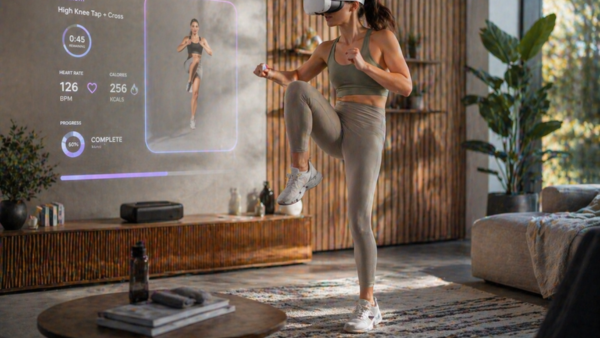
VR fitness is no longer riding on metaverse hype. That is exactly why it has a better chance of lasting.
The earlier wave of VR exercise often got bundled into a much bigger promise about digital worlds, futuristic living, and the headset becoming the center of everything. That larger story has cooled off. Meta has cut back parts of its VR software effort, shifted Horizon Worlds toward mobile, and stopped producing new content for Supernatural, its once-flagship fitness app.
Oddly enough, that may be good news for VR fitness itself.
It Works Better As A Habit Than As A Grand Vision
VR fitness seems more durable when people treat it like a workout tool, not a world-changing platform. The strongest case for it is simple: it makes exercise feel less boring. Research published in 2025 and 2026 has linked immersive VR exercise to higher motivation, better adherence, and improvements in physical activity and quality-of-life measures in several settings, though the evidence base is still evolving and not every study is equally strong.
That matters because adherence is the whole game in fitness. The best workout is still the one people actually keep doing.
The Category Already Has Real Consumer Behavior Behind It
This is not a purely theoretical market anymore. Beat Saber remains one of the clearest proof points that movement-based VR can become a durable habit product, not just a novelty. UploadVR reported in 2025 that at least 10 million Quest owners had completed at least one Beat Saber track on standalone Quest headsets alone.
Not everyone using Beat Saber is treating it as formal exercise, of course. But that scale matters because it shows that VR movement behavior has already reached a mass audience in a way many earlier fitness-tech fads never did.
It Solves A Real Problem For People Who Hate Traditional Workouts
One reason VR fitness keeps surviving is that it is not really selling “fitness” in the usual sense. It is selling distraction, immersion, and emotional relief.
That is a big difference. Many people do not struggle because they lack knowledge about exercise. They struggle because exercise feels repetitive, uncomfortable, public, or mentally draining. The Verge’s recent reporting on Supernatural showed how strongly some users, especially older adults and people with mobility limitations, valued VR fitness as a more accessible, less judgmental environment.
That kind of use case is much stronger than hype.
The Hardware And Software Ecosystem Is More Mature Now
Even with Meta raising Quest prices in the U.S. this month, standalone VR hardware is still far more mainstream and usable than it was during earlier VR cycles. Quest devices remain consumer products with established app ecosystems rather than experimental gadgets for enthusiasts only. Reuters reported that Meta’s latest U.S. pricing changes move the entry-level Quest 3S to $349.99 and the Quest 3 to $599.99, which is higher than before, but still leaves a real installed base in the market.
That matters because the category no longer depends on people imagining the future. It depends on people already owning the device.
Why The Supernatural Pullback Does Not Kill The Category
Supernatural losing new content is a real setback, especially because it had built a loyal user base and community. But the bigger lesson may be that VR fitness is now larger than any single flagship app. Existing subscribers can still access Supernatural’s library, which UploadVR says spans thousands of workouts, and the broader appeal of VR exercise now stretches across rhythm games, boxing apps, guided workout experiences, and hybrid training tools.
So the category may survive even if one of its most visible brands stops growing.
What Makes This Wave Different
The difference this time is that VR fitness no longer needs to win the culture. It only needs to win the routine.
That is a much more realistic goal. It does not have to replace gyms, running, strength training, or traditional fitness apps. It just has to become one more repeatable way people move their bodies at home. The current evidence suggests immersive exercise can improve enjoyment and adherence for at least some users, and the market evidence suggests enough people already treat VR movement as worth paying for.
VR fitness is sticking around because it finally looks less like a futuristic promise and more like a practical behavior. Once a category stops trying to be a revolution and starts quietly becoming useful, that is often when it gets real staying power.
Comments
No comments yet. Be the first to share your thoughts.
Log in to add a comment.