


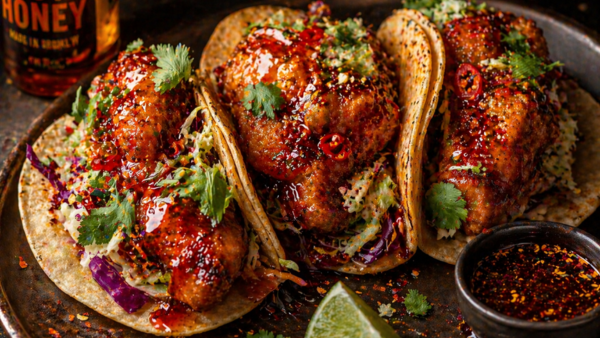
Sweet and spicy used to feel like a niche flavor move. Now it feels like it is everywhere.
That is because “swicy” does something modern food culture loves: it gives people contrast. It is familiar but still exciting. It feels indulgent without being boring. And most importantly, it delivers the kind of big, fast flavor that works just as well in a social media clip as it does on an actual menu. Current food-trend reporting shows swicy flavor cues rising sharply in consumer conversations, while hot honey alone has grown to 11.3% of U.S. restaurant menus, up 230% over four years.
Why Sweet And Spicy Feels So Addictive
Swicy works because it creates tension in one bite. The sweetness pulls people in. The heat keeps the flavor moving. That combination feels more layered than plain spicy food and more memorable than plain sweet food.
It also gives brands a flexible formula. Honey, hot honey, chili crisp, pepper glazes, spicy maple, fruity heat, and smoky-sweet marinades all fit into the same larger flavor family. That makes swicy less like a passing gimmick and more like a platform brands can keep building on. Datassential has described hot honey as a defining engine of the swicy movement, while Tastewise reported strong year-over-year growth in sweet-and-spicy discussion around major food moments.
Why Brands Keep Betting On It
Swicy also wins because it performs commercially.
Chipotle’s return of Chipotle Honey Chicken is a perfect current example. The company said the item delivered the highest order rates of any limited-time offering in its history when it launched in 2025, and it is now returning across the U.S., Canada, and the U.K. starting April 28. Chipotle’s own framing is revealing: the brand is positioning the item as proof that when flavor and timing hit together, customers keep thinking about it.
That is a strong signal for the broader food industry. If a limited-time protein built around smoky chipotle peppers and honey becomes a record performer, it suggests consumers are not just curious about swicy. They are actively choosing it.
Why The Trend Feels Bigger Than One Menu Item
What makes swicy especially durable is that it travels well across categories.
It works in chicken, pizza, sandwiches, sauces, snacks, dips, candy, cocktails, and even seasonal desserts. Food trend reporting this year has linked swicy to everything from sports snacks to Easter chocolate innovation, which shows how widely the profile can stretch without feeling out of place.
That kind of range matters. The more places a flavor idea can show up, the more likely it is to become part of mainstream taste instead of staying a novelty.
What Swicy Says About How People Want To Eat Now
The popularity of swicy also reflects something bigger about modern eating habits: people want flavor that feels high-impact.
They want foods that cut through boredom quickly. They want familiar ingredients with a twist. They want meals and snacks that feel a little more emotionally charged than standard menu formulas. Sweet and spicy checks all those boxes. It feels playful, bold, and highly craveable without asking consumers to learn a completely new flavor language.
That is why swicy keeps winning. It is not just trendy because it looks good online. It keeps working because it gives people what they increasingly want from food: contrast, excitement, comfort, and just enough heat to make the whole thing feel worth talking about.
Comments
No comments yet. Be the first to share your thoughts.
Log in to add a comment.