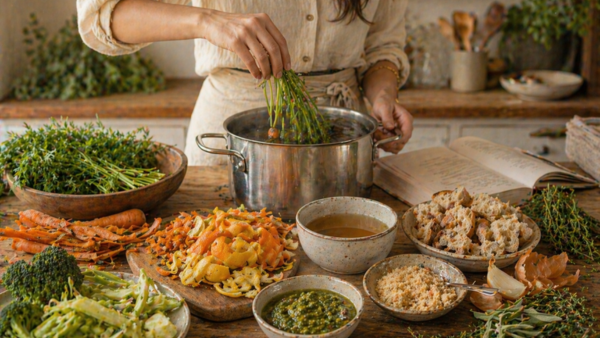
Most kitchens throw away more flavor than people realize.
Carrot tops, broccoli stems, stale bread, citrus peels, herb stems, pickle brine, wilted greens, parmesan rinds, and soft fruit often get treated like scraps when they are actually ingredients waiting for a second life. That idea matters more than ever when food waste is still a huge household problem. In the United States, food waste is estimated at 30% to 40% of the food supply, and the average family of four loses about $1,500 a year to uneaten food.
Why The Zero-Waste Pantry Is Catching On
Zero-waste cooking is not really about perfection. It is about paying better attention.
Home cooks are becoming more aware that a lot of what gets tossed is still usable, especially in soups, sauces, stocks, crisps, pestos, stir-fries, and baked dishes. That shift also fits the broader food mood right now: people want cooking to feel smarter, thriftier, and more creative without becoming joyless. Even recent food coverage has leaned into practical scrap cooking, with Food & Wine highlighting ways to turn vegetable odds and ends into pesto, stock, vinaigrettes, and flavored butter.
Start With The Easiest “Scraps”
The best way to build a zero-waste pantry is to begin with ingredients that are almost effortless to reuse.
Vegetable scraps are the obvious entry point. Onion skins, carrot peels, celery ends, mushroom stems, and herb stalks can go into a freezer bag until you have enough for broth. Broccoli stems can be shaved into slaw, blended into soup, or chopped into stir-fry. Beet greens, radish tops, carrot tops, celery leaves, and fennel fronds can all be turned into pestos, sauces, or tossed into salads. Food & Wine specifically points to uses like carrot-top pesto, broccoli-stem vinaigrettes, and celery-leaf salads, which is exactly the kind of cooking that makes the zero-waste pantry feel less like a restriction and more like an upgrade.
Bread, Peels, And Brine Deserve Better
Produce scraps are only part of the story.
Stale bread can become croutons, breadcrumbs, panzanella, strata, stuffing, or a thickener for soups and sauces. Citrus peels can be zested into dressings, candied, dried for tea, or simmered into syrups. Pickle brine can be whisked into salad dressing, used to marinate chicken, or stirred into potato salad for extra acidity. Parmesan rinds can be dropped into a pot of beans, soup, or tomato sauce to add depth.
The larger point is simple: a lot of “waste” is really just an ingredient you have not assigned a job yet.
A Better Pantry Starts Before You Cook
Zero-waste cooking gets easier when the pantry is organized around visibility instead of forgetting.
USDA’s consumer guidance on food waste emphasizes planning, storing food properly, and using what you already have before buying more. That sounds basic, but it is the difference between ingredients getting used and ingredients quietly dying in the back of the fridge. A smaller kitchen trash can can also make people more aware of how much they are tossing, which some cleaning experts say naturally changes behavior over time.
A smart zero-waste setup might include:
- a freezer bag for stock scraps
- a container for stale bread
- a “use first” bin in the fridge
- a small jar for leftover herbs, sauces, or half-used produce
That kind of system makes creative cooking much easier on busy days.
Why This Style Of Cooking Feels So Good
There is a satisfaction to zero-waste cooking that goes beyond saving money.
It makes you feel sharper in the kitchen. You stop seeing ingredients in a flat, one-purpose way and start seeing options everywhere. A soft tomato becomes sauce. A bruised peach becomes compote. Herb stems become salsa verde. Leftover rice becomes fried rice. The kitchen starts feeling less like a place where food disappears and more like a place where food keeps becoming something else.
That mindset also has a bigger payoff. USDA says reducing food waste helps make nutritious diets more affordable, and the climate case is real too: EPA budget documents note that roughly 8% to 10% of global greenhouse gas emissions come from food loss and consumer food waste.
The zero-waste pantry works because it changes the question. Instead of asking, “Should I throw this out?” you start asking, “What else could this become?” That one shift can make cooking cheaper, more creative, and a lot more satisfying. And once you start noticing how much flavor was hiding in the things you used to toss, it becomes very hard to go back.